
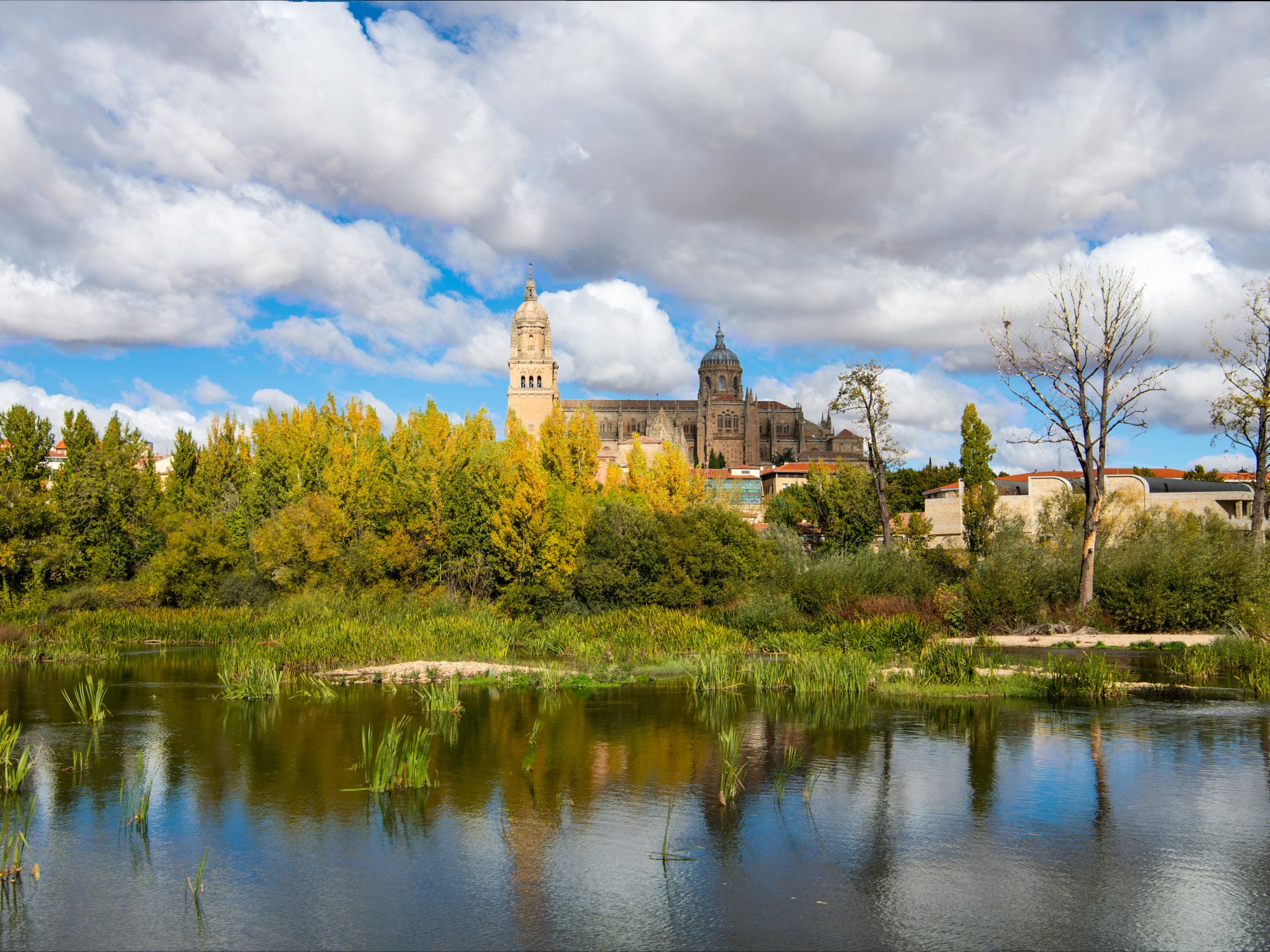
Salamanca is one of Spain’s most famous cities.
The old streets and magnificent architecture have an irresistible charm.
Not to mention the many gems hidden in plain sight – the old churches spread out across the city, bearing testament to the importance of religion to the people here.
Here are a few of the must-visit churches, convents and cathedrals in Salamanca:
Iglesia de Sancti Spiritus (XVI century)
This church is divided into two main sections – the main sanctuary as well as the chapel.
The most prominent aspect of the chapel is the series of exquisite paintings encircling the room, portraying the Passion of Christ.
During our visit, there was a Mass ongoing in the main sanctuary so we spent a moment silently observing the congregation from the Chapel.
There is a very familiar and personal feeling about this church; maybe because of its relatively smaller scale.
Iglesia de San Cristóbal (XII century)
Like the Sancti Spiritus, this is a quaint little church with a homey feeling.
The church seemed to be closed when we arrived on Friday morning.
We were about to turn away when a nice elderly man, who was probably the verger, opened the door and warmly invited us inside.
He switched on the lights in order to give us a tour of the interior and very enthusiastically explained the architecture and design of the small church; albeit in Spanish that we regrettably could not understand.
But we could feel his affection for the church through his voice and gestures.
From the words I could catch, he explained that the Church was built with both Romanesque and pre-Gothic elements as could be seen by both rounded arches and pointed arches held up by the four main pillars.

There is a well-preserved and hauntingly beautiful wall sculpture by Pedro Hernandez, portraying the Burial of Christ.
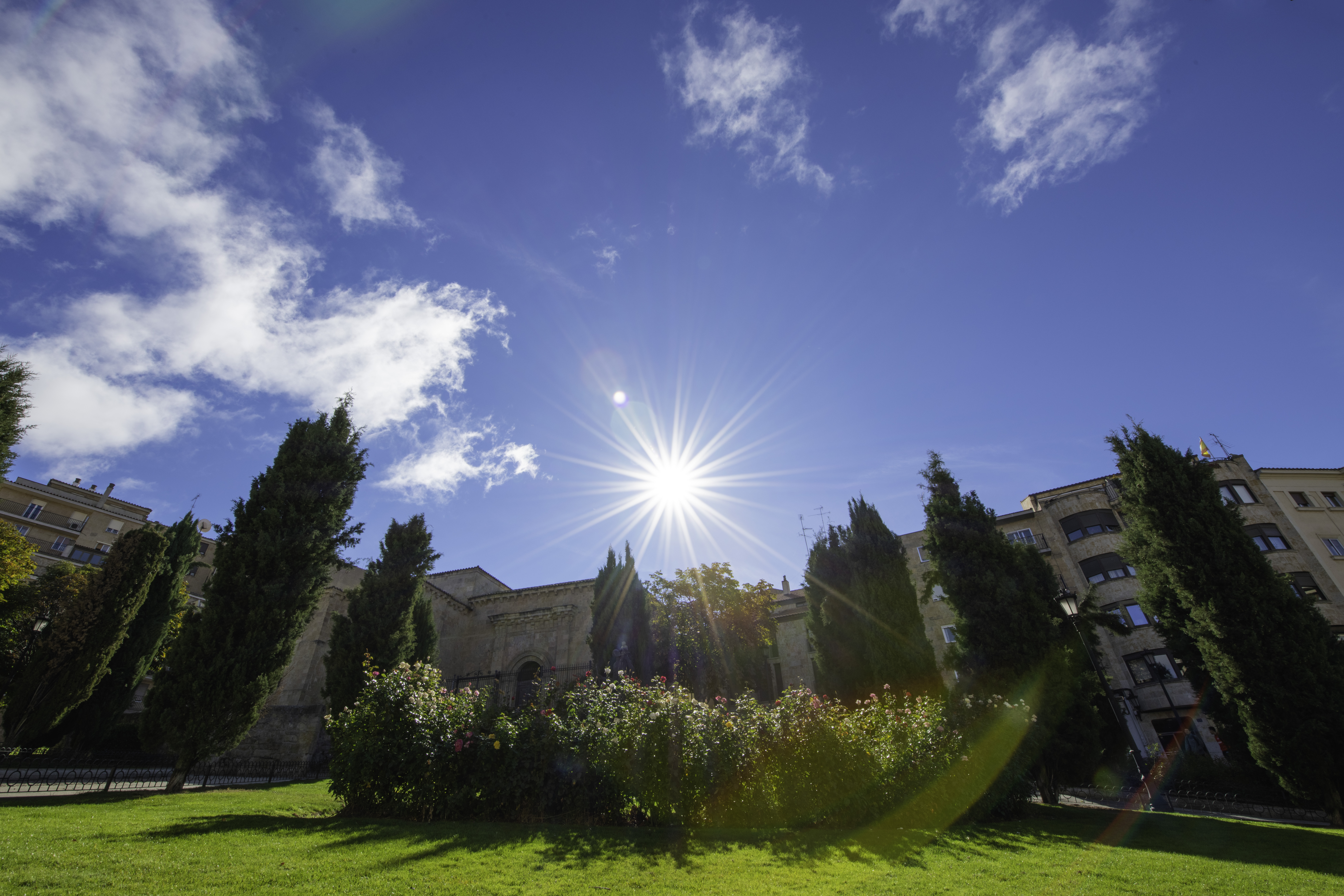
On the outside, the back of the building looks very solemn and stern.
But swing around to the front, and there’s a pleasant well-groomed lawn no doubt maintained by very dedicated persons like the kindly man we encountered.
Convento de San Esteban (XVI-XVII century)
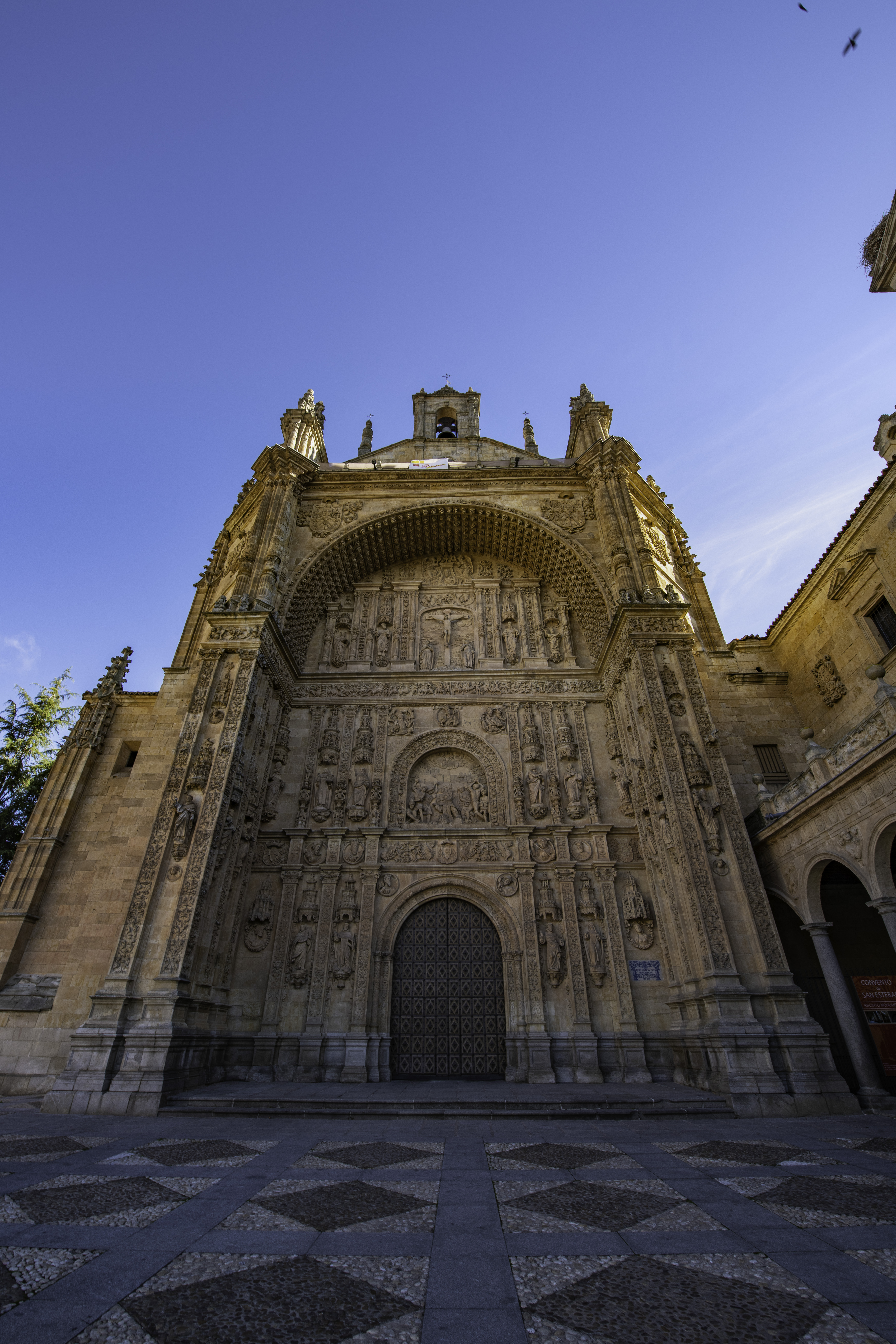
The most striking thing about this church is definitely the ornate altar-like front facade.
At the top of this facade, above the main entrance, there is a tympanum featuring the stoning of San Esteban (St Stephen) – thus the naming of the
monastery after the martyr.

This Dominican monastery spans over a large compound and includes several buildings connected by a Gothic-Renaissance cloister built by Brother Martin de Santiago, a former member of the monastery.
Inside the Church you’ll find a large altarpiece covered in gold.
Iglesia del Espíritu Santo, La Clerecía (XVIII century)
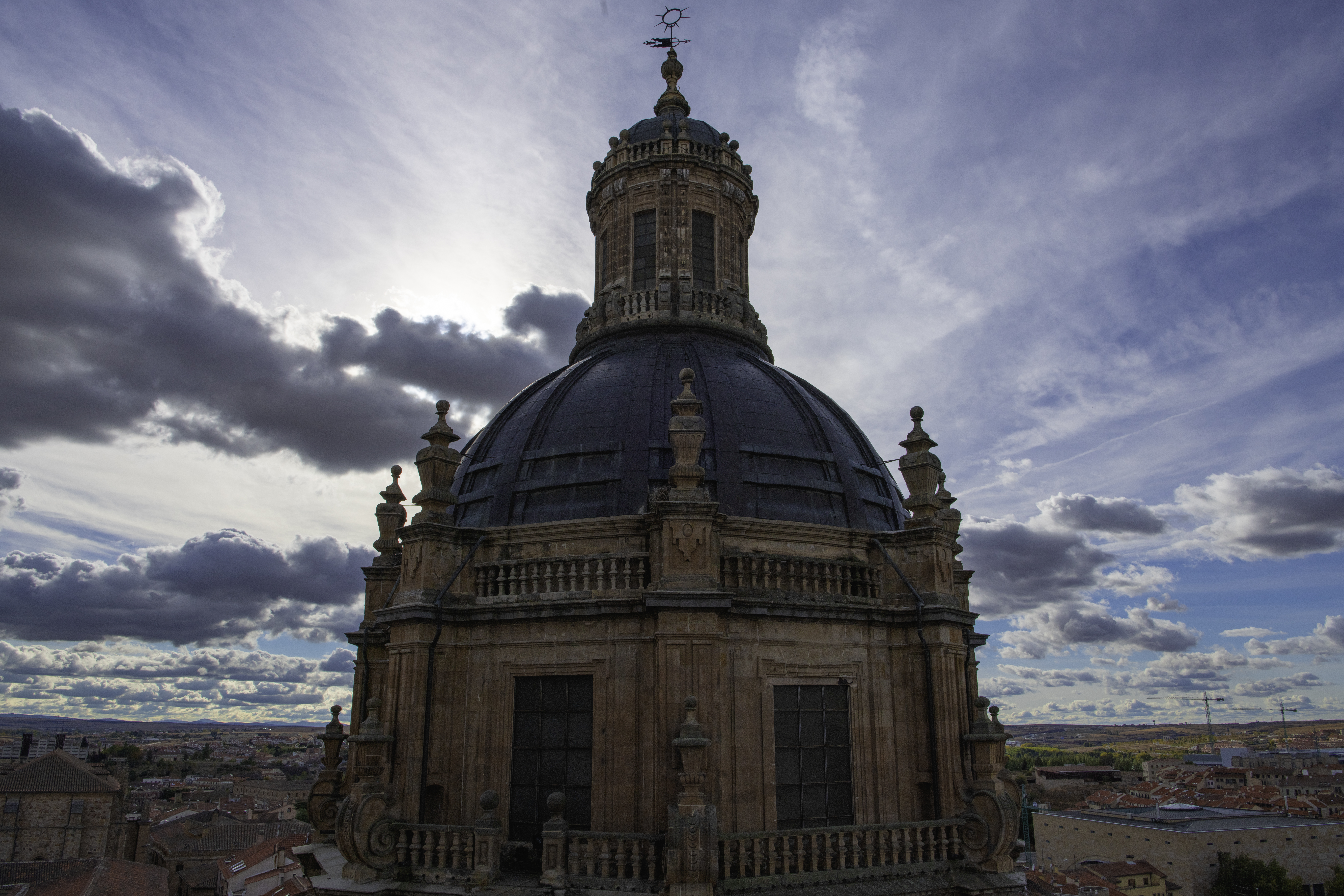
These premises house a Baroque church as well as the Pontifical university of Salamanca.
We highly recommend scaling the Scala Coeli tower. Scala Coeli means “Stairway to heaven”.
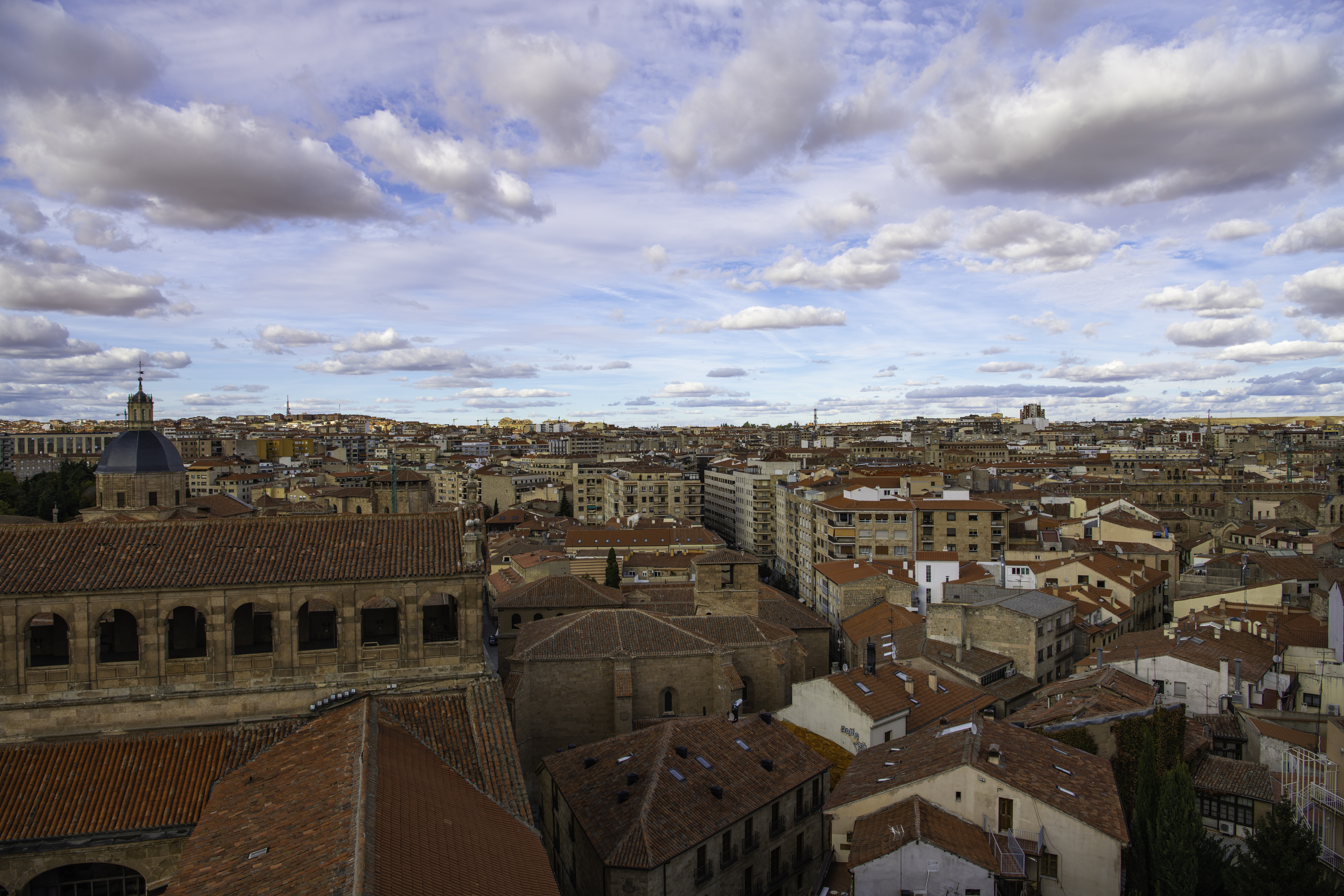
The tower is high enough for rewarding views of the church courtyard and also a large fraction of the city of Salamanca.

From the many balconies at the top of the tower, you will get an excellent photo opportunity of the Salamanca cathedral as it rises above the surrounding tree tops.
It’s also a good chance to get a sneak peek at many of the famous sights in the city including the San Sebastian Church, the Convent of St. Stephen, the Iglesia de la Purísima and the Plaza Mayor.
Catedral Nueva, New Cathedral (XVI-XVIII century) & Catedral Vieja, Old Cathedral (XII-XIII century)
The cathedral of Salamanca is one of the iconic landmarks of Salamanca situated by the river Tormes.
In actual fact, the cathedral consists of two separate cathedrals, the Catedral Nueva and the Catedral Vieja, joined together by a common wall.
It so happened because, by the end of the XV century, the population of the city had outgrown the size of the old cathedral.
Instead of rebuilding the old cathedral, it was decided to build a new one next door.
While construction of the new cathedral was ongoing, the old one continued to operate.
By the time the new cathedral was ready in the XVIII century, the old cathedral had already garnered so much historical value and tourist interest that it was well worth preserving.
And so, both cathedrals are standing til today.
The style of the facade is quite similar to the Convento de San Esteban as it is utilizing an architectural technique developed in Spain during the late 15th century between the late Gothic and early Renaissance period.
Once inside, you will be mesmerised by the magical towering dome and symmetrical ribbed vaults projecting out of the central nave.
The Coro, one of the most significant structures of the Spanish Baroque era, was built by Alberto de Churriguera.
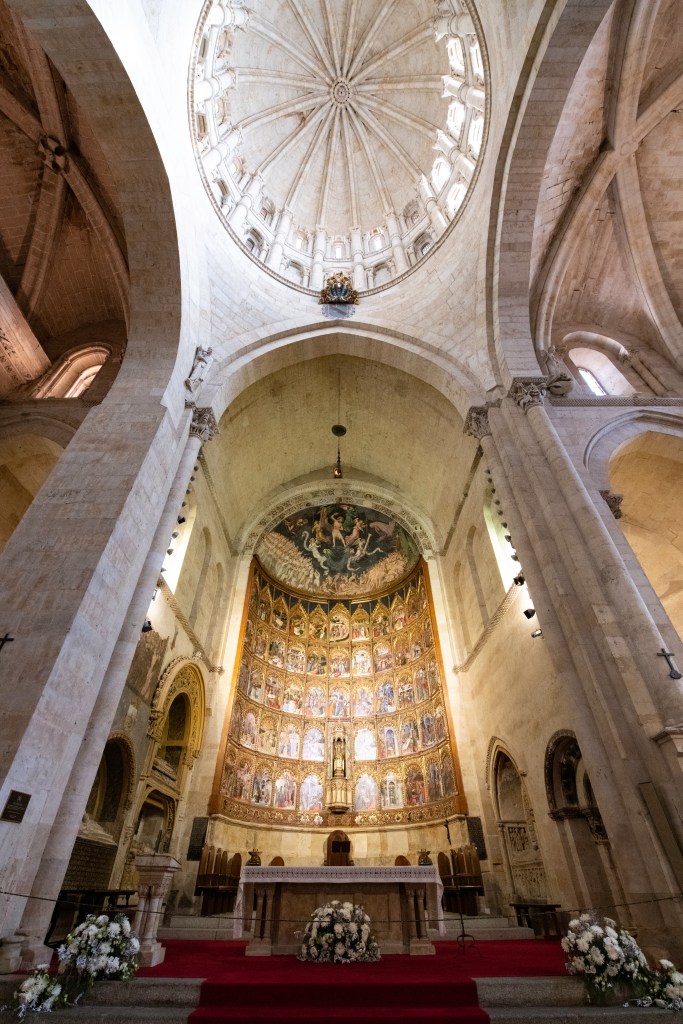
The Catedral Vieja by contrast is austere and exudes a medieval charm.
The main altarpiece is made up of 53 small paintings portraying the lives of Jesus and the Virgin Mary.
Access to the old cathedral is through the inside of the new catedral.

 Voyage Grande